Column · @gettreefellingcptnnotes
Expert Tree Felling CPTN: What to Expect from a Professional Job
Why Professional Tree Felling Matters in Cape Town
Every time I drive through the southern suburbs of Cape Town, I see the aftermath of a storm: a split trunk leaning over a driveway, a broken limb wedged in a roof gutter, or a tree stump that was cut too high and is now sprouting again. Tree removal is not something you guess at. It requires judgment, the right equipment, and a clear understanding of the tree species and the site conditions. That is where the phrase "tree felling cptn" comes in, it stands for the kind of thorough, on-site approach that homeowners and property managers in the Western Cape need.
Reading the Tree Before the First Cut
A good arborist does not just walk up to a tree and start the chainsaw. They do a full site inspection first. I have seen trees that looked perfectly healthy from the street but had a rotten core near the base. I have also seen trees that were leaning so badly that a standard felling cut would have sent them straight through a neighbour's wall. A site inspection covers the tree's species, its lean, the condition of the trunk and roots, and the surrounding obstacles, buildings, power lines, garden beds, and the drop zone where the tree will fall.
When you call a service like tree felling cptn, the professional quote you receive should reflect that inspection. It should be based on the actual size and location of the tree, not a flat rate pulled from a table. I have found that on-site quotes are far more accurate than phone estimates, because the arborist can see the access route, the slope of the ground, and the thickness of the canopy.
Gear That Does the Job Safely
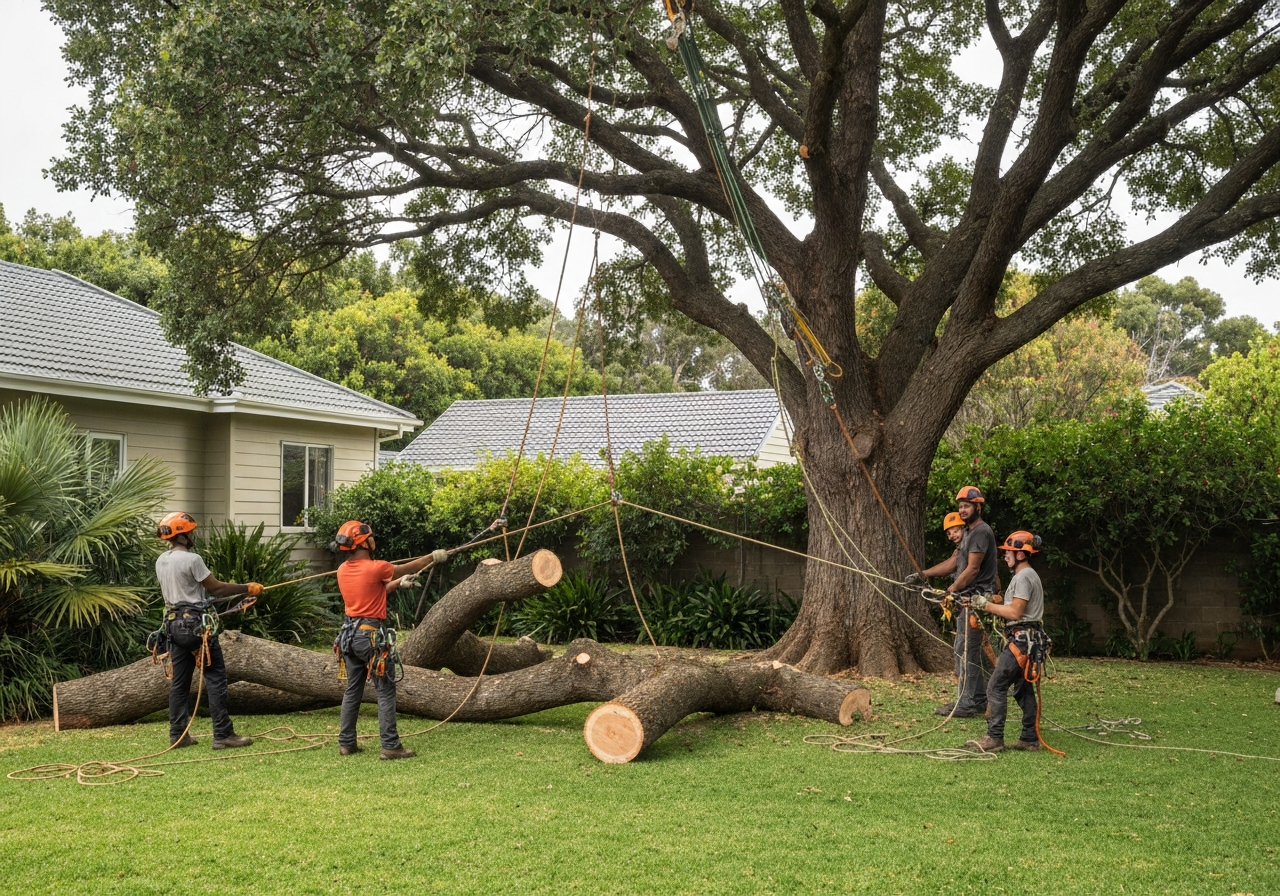
Professional tree felling is not just about skill. It is also about equipment. A climber will use a Stihl or Husqvarna chainsaw, depending on the job and personal preference. Both brands make reliable saws, but the choice often comes down to weight, balance, and how the saw handles in a tight spot. For larger trunks, a heavier saw with a longer bar is needed. For limbing and pruning, a lighter saw is better. The arborist will also wear proper safety gear: a hard hat, eye and ear protection, chainsaw chaps, and gloves with a good grip. I have seen too many DIY attempts where someone wears flip-flops and shorts while cutting overhead branches. That is a recipe for disaster.
Beyond the chainsaw, a wood chipper is often used to process branches and smaller sections of the trunk. This turns a massive pile of debris into chips that can be used for mulch or hauled away easily. Stump grinding is another critical step. After the tree is down, the tree stump remains. A stump grinder can chew that stump down to below ground level, so you can replant grass or a new tree without a tripping hazard. Some services include stump grinding in their package; others charge separately. It is worth asking about when you get your professional quote.
Working with Tree Species and Local Conditions
Cape Town has a mix of indigenous and exotic tree species. You might be dealing with a tall gum tree (Eucalyptus), an invasive pine, an oak, or a native yellowwood. Each species behaves differently when cut. A gum tree, for example, is heavy and brittle, with a high risk of splitting. An oak is denser and more predictable but takes longer to cut through. The arborist needs to know the species to plan the felling cut and to estimate how the tree will break as it falls. That knowledge also affects debris removal, some wood is better left as firewood, while others need to be chipped or hauled to a green-waste facility.
The Western Cape weather also plays a role. During the dry summer months, the ground is hard and the trees are less likely to have wet, heavy canopies. In the rainy winter, the ground can be soft and the tree's root plate may be unstable. A good arborist will check the soil conditions and may recommend waiting for drier weather if the tree is particularly large or dangerous. This kind of judgment is what separates a professional tree removal from a hack job.
Permits and Municipal Rules
In many parts of Cape Town, you need a municipal permit to fell a tree that is above a certain size or that is a protected species. The arborist should know about that. Some companies handle the permit process for you, or at least tell you exactly what you need to submit. I have seen homeowners get fined because they cut down a tree without checking the regulations. A reliable service will include that advice in their site inspection and planning. It is one more reason to choose a local company that knows the Cape Town by-laws.
The Drop Zone and Safety Planning
One of the most overlooked parts of tree felling is the drop zone. That is the area where the tree is expected to land. The arborist will clear that zone of cars, garden furniture, and people. They will also set up warning signs or cones if the tree is near a public path or road. A professional crew will have a spotter who watches the tree's movement and can call out warnings. The felling cut itself is a precise sequence: a notch cut on the side facing the drop zone, then a back cut that leaves a hinge of wood to guide the tree down. If the hinge is cut too deep, the tree can kick back or twist. If it is too thick, the tree might not fall at all. That is why you want someone with experience, not just a chainsaw and a weekend.
Cleanup and Landscaping After the Fall
Once the tree is down, the real work begins. Branches are cut into manageable lengths. The trunk is sectioned and either bucked for firewood or fed into the wood chipper. The stump is ground down with a stump grinder, and the remaining wood chips and sawdust are raked up. Many companies offer full cleanup and debris removal as part of the service. That means you are left with a clean site, ready for landscaping. If you plan to plant a new tree in the same spot, you will need to wait until the stump grinding is done and the area is levelled. Some arborists can even recommend a suitable replacement tree species that will thrive in that spot without causing the same problems.
Getting a Professional Quote
When you contact tree felling cptn for a quote, expect a thorough conversation. They will ask about the tree's height, trunk diameter, species, and its proximity to structures. They will also ask about access, can a truck get close enough for the wood chipper, or will the crew have to carry everything out by hand? That affects the price. A good quote will break down the cost of labour, equipment, debris removal, and stump grinding. It will also include a timeline and a clear explanation of what the crew will and will not do. If a quote seems too low, ask why. If it seems too high, ask what is included. Transparency is a sign of a professional operation.
I have seen too many DIY tree removals go wrong: a chainsaw kickback that sent someone to hospital, a tree that fell the wrong way and crushed a fence, or a stump that was left so high that it became a tripping hazard. Hiring a professional arborist with the right gear and local knowledge saves money and stress in the long run. For anyone in Cape Town or the Western Cape who needs a tree taken down safely, a service that does a proper site inspection, uses Stihl or Husqvarna equipment, and offers full stump grinding and debris removal is the right choice. That is what the phrase "tree felling cptn" represents: a professional, thorough approach to tree care that respects the tree, the property, and the people involved.
So whether you are dealing with a storm-damaged tree, an invasive species that needs to go, or simply want to make space for new landscaping, call a professional. Get a site visit. Ask about the drop zone, the felling cut, and the cleanup. And make sure your quote covers everything, tree removal, stump grinding, and debris removal, so there are no surprises when the crew arrives.